NASA
Turning Global Greenhouse Gas Data into a Decision-Support Platform
PRODUCT OUTCOME
Launched the first unified U.S. greenhouse gas data platform, connecting data from NASA, EPA, and NIST into a single decision-support experience for scientists, policymakers, and the public.
TIMELINE
2025 - 2026
ROLE
Senior UX Designer
DECISION LOG
Dual-path architecture over single unified search
Tradeoff: Higher implementation complexity, but dramatically better task completion for both primary audiences.
Interactive stories as primary policy entry point
Tradeoff: Required significant content investment, but reduced time-to-insight for non-technical users by an order of magnitude.
Shared taxonomy across agencies
Tradeoff: Months of cross-agency alignment, but eliminated the confusion of competing terminology that had blocked prior integration efforts.
THE PROBLEM
Multi-agency climate data scattered across siloed repositories with no unified point of access.
The U.S. had no single platform where scientists, policymakers, and the public could access, explore, and understand greenhouse gas emissions data. Critical datasets from NASA, EPA, and NIST lived in separate systems with different formats, access patterns, and terminology.
The challenge wasn't just designing an interface. It was defining what a 'decision-support platform' should be for an audience ranging from atmospheric scientists to Congressional staffers, and building the information architecture to serve them all.
PRODUCT STRATEGY
Designing for decision-making across expertise levels
Rather than building a data catalog, I advocated for framing the platform around user decisions: What question is someone trying to answer? What action will they take with this data? This shifted the product from 'data access' to 'data-informed action.'
I led workshops with stakeholders across all three agencies to align on a shared taxonomy and navigation model. The key strategic insight was that scientists and policymakers needed fundamentally different entry points into the same data: researchers wanted granular access, while decision-makers needed synthesized stories.
We designed a dual-path architecture: interactive data stories for policy audiences, and direct dataset access with rich metadata for researchers. Both paths led to the same underlying data, maintaining a single source of truth.
PRODUCT STRATEGY
Designing for decision-making across expertise levels
Cross-agency taxonomy alignment
Facilitated workshops with scientists from NASA, EPA, and NIST to create a shared vocabulary for greenhouse gas data categories. Each agency had its own naming conventions; we built a unified taxonomy that respected scientific precision while being navigable by policymakers.
Balancing scientific rigor with accessibility
Worked with atmospheric scientists to determine how much complexity could be abstracted for general audiences without losing scientific validity. The result was a layered disclosure model where users could progressively access more technical detail.
Defining the MVP scope across agencies
Led prioritization sessions to determine which datasets, tools, and interactive stories would launch in the initial release. Aligned three agencies with different priorities around a shared definition of 'minimum viable platform.'
PRODUCT STRATEGY
Designing for Decisions
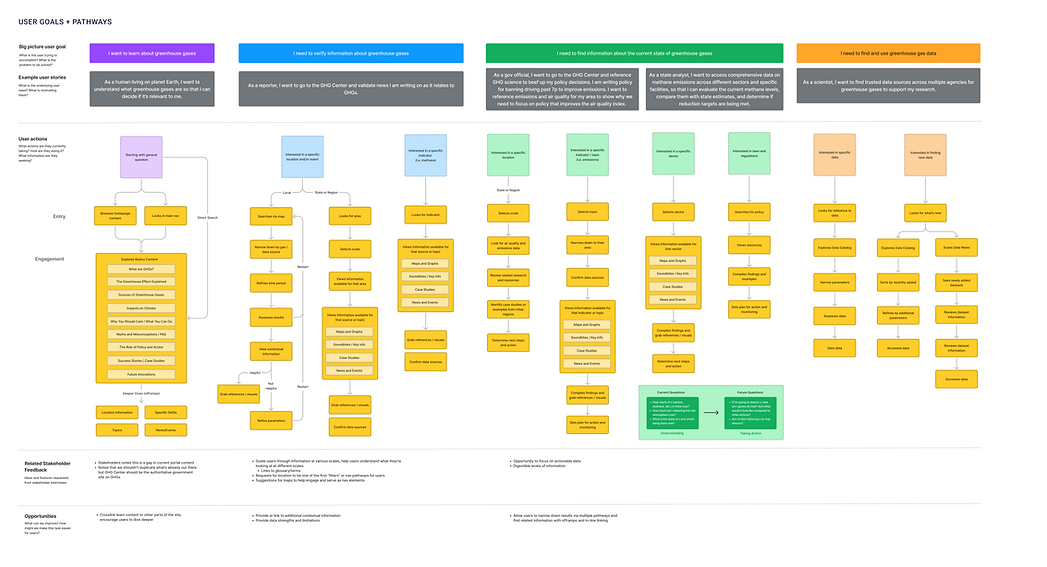
To better understand these needs, I mapped key user goals, motivations, and decision-making journeys, identifying common pathways users followed when exploring greenhouse gas information.
The information architecture was designed around the decisions users were trying to make rather than the datasets available within the platform. By organizing content around locations, sectors, topics, and actions, the experience helped users move from questions to insights and ultimately to informed decision-making.
Key dataset discovery pathways synthesized from user flow mapping and stakeholder research.
.png)
Translating research insights into a user-centered information architecture organized around locations, sectors, topics, and actions rather than datasets, creating clearer paths to discovery and insight.
DECISION SUPPORT
Turning Data Into Action
With the information architecture and user pathways established, I translated the strategy into a series of wireframes and concept designs that explored how users could discover, understand, and act on greenhouse gas information. Early wireframes focused on navigation, content hierarchy, and integrating multiple entry points through locations, sectors, topics, interactive maps, and data tools.
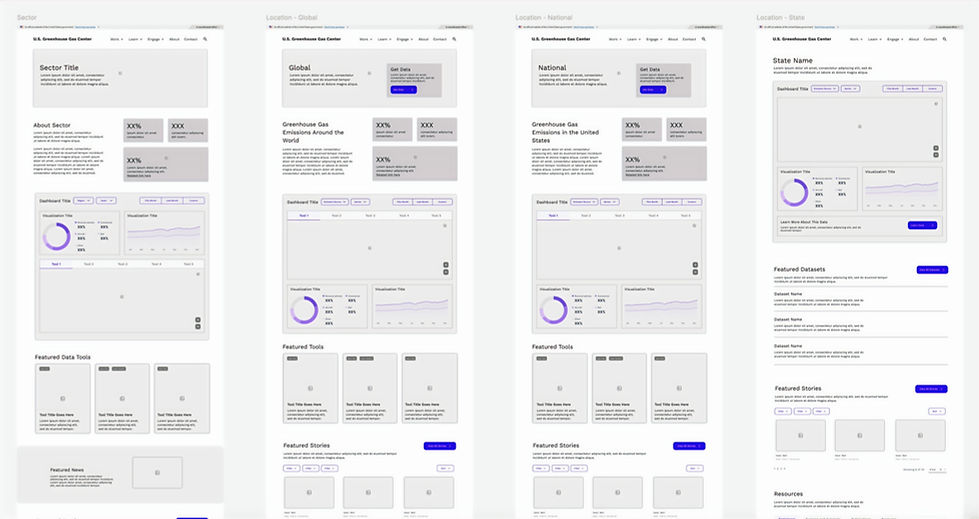
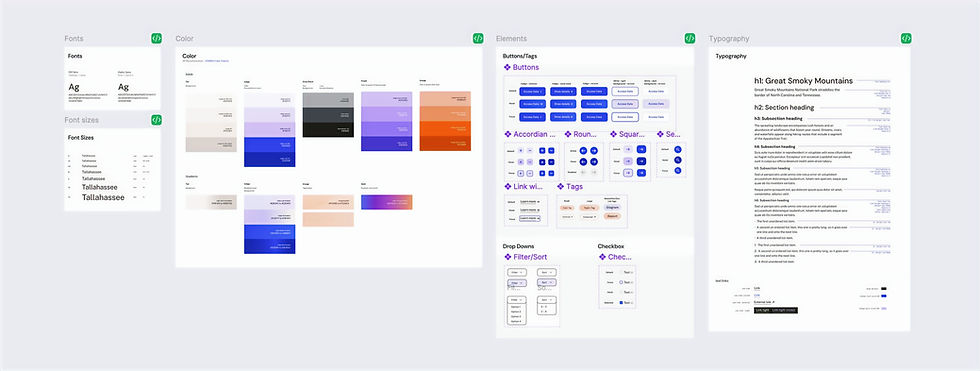
As the designs evolved, I developed a flexible design system that established reusable patterns for navigation, content pages, interactive maps, data visualizations, dashboards, and storytelling experiences. The resulting high-fidelity concepts balanced scientific credibility with accessibility while creating a scalable foundation for future growth. By combining a cohesive visual language with consistent interaction patterns, the platform could support diverse content types and user needs while maintaining a unified experience across the ecosystem.
Visualizing Climate Decisions
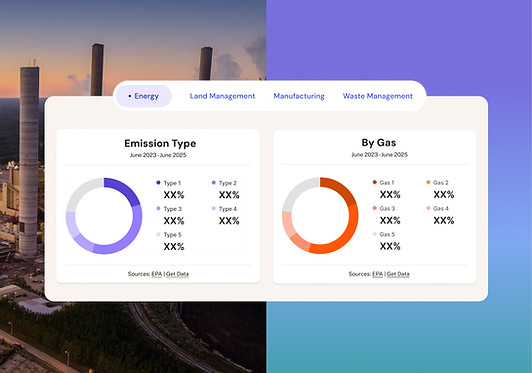
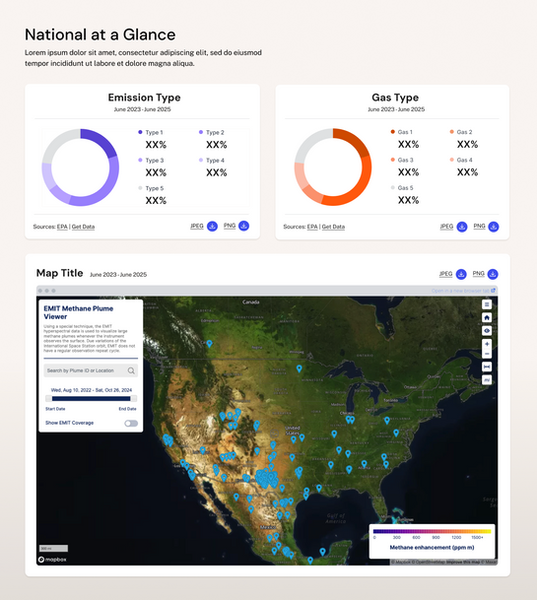
A key design goal was helping users connect data to decisions. Rather than simply displaying data, the mapping experience was designed to help users answer questions, uncover insights, and make informed decisions using greenhouse gas information.
Specifically, I focused on building tools that allowed users to:
-
Compare emissions and trends across locations and time periods
-
Explore multiple data layers to uncover patterns and relationships
-
Drill from high-level geographic insights to supporting data and evidence
-
Connect map findings to relevant actions, resources, and case studies
FINAL PRODUCT
A Platform for Climate Intelligence
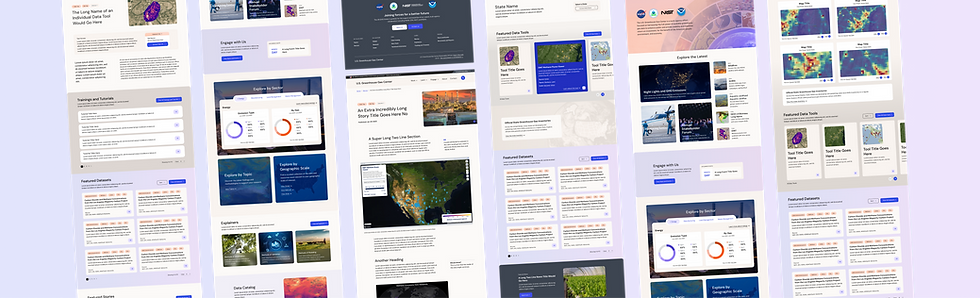
The final designs reimagined the Greenhouse Gas Center as a decision-support platform rather than a data repository. Through interactive maps, visualizations, explainers, and connected content pathways, users could investigate emissions trends, compare regions, understand impacts, and access the information needed to support climate-related decisions with confidence.